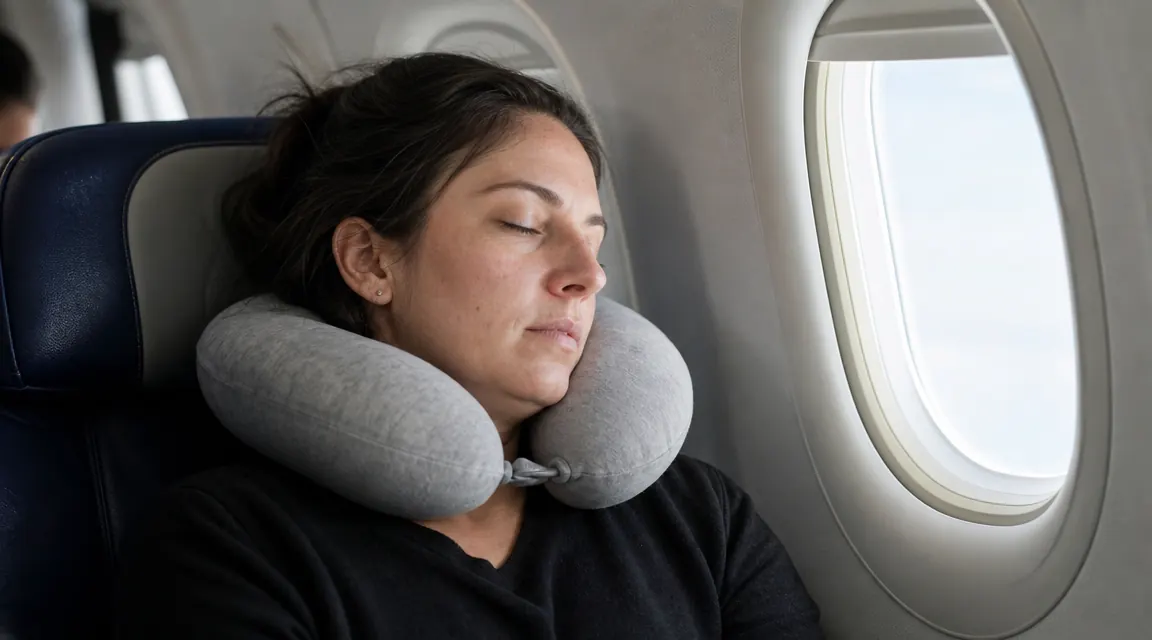
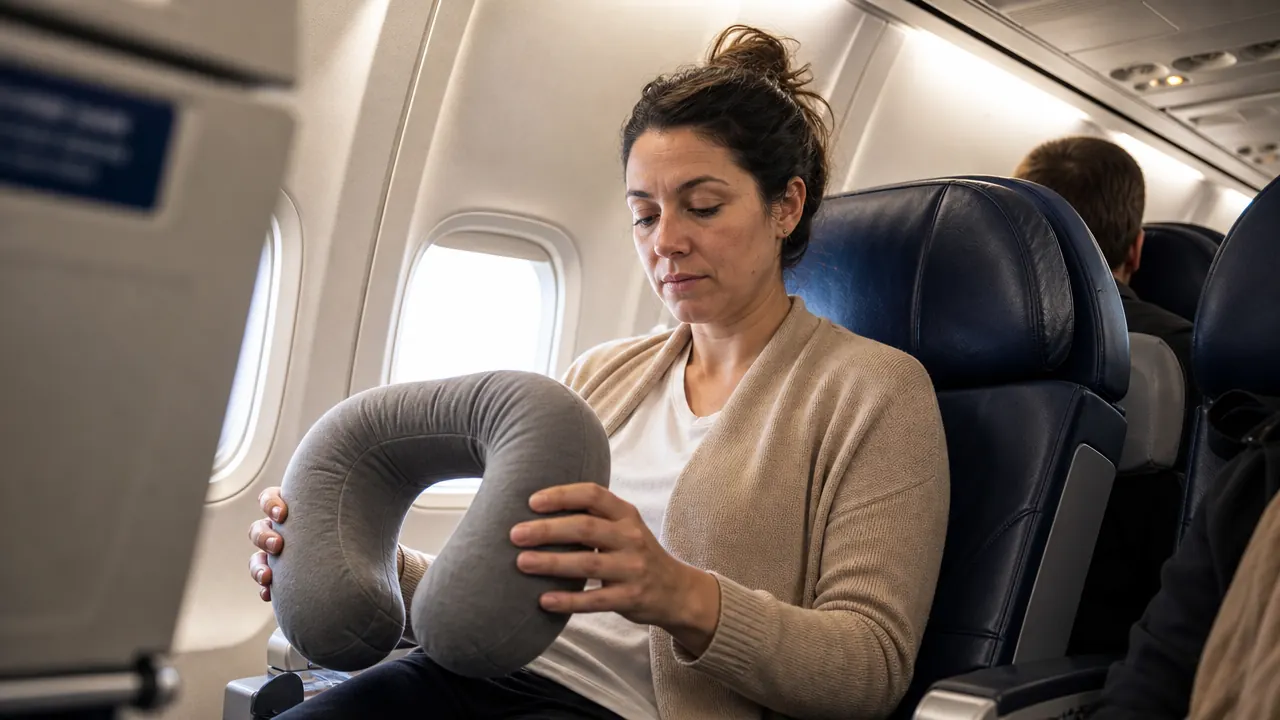
I woke up stiff after every single flight. Not just a little tight. The kind where you grip the seat back to stand up and the person across the aisle gives you a concerned look. I tried the kiosk pillow from the airport, tried a rolled hoodie, tried leaning on the window. None of it worked. When I found the napfun neck pillow for under twelve dollars, I figured the worst case was being out the cost of a fast-food lunch. What I did not expect was how many small surprises came with it. Some good. A few that nobody in the product listings mentions at all. This is the honest version of that story.
I want to be upfront about something before I go further. I have a separate long-term review of this same pillow over at the napfun neck pillow review that covers the overall performance across six road trips. This piece is different. This one is specifically about the things that caught me off guard, including the ones that made me almost return it. If you want the full picture, read both. If you want the honest surprises first, you are in the right place.
Quick Verdict
A solid budget neck pillow that genuinely reduces post-flight stiffness. The first use is the roughest. There are real quirks around off-gassing, carry bulk, and side-sleeper fit. Stick with it past the break-in and it earns its spot in your travel bag.
Amazon Check Today's Price →Still waking up with a sore neck after every flight? Here is what actually helped me.
The napfun neck pillow uses slow-rebound memory foam to keep your head supported during long flights and road trips. Under twelve dollars at current pricing. More than twenty thousand Amazon reviews from people in the same situation.
Amazon Check Today's Price on Amazon →The First Thing Nobody Warns You About: The Smell
I opened the box two nights before a flight to Phoenix. The pillow came in a sealed plastic bag inside the cardboard packaging. When I cut the plastic open, there was a noticeable chemical smell. Not overwhelming, but clearly there. This is standard memory foam off-gassing. Polyurethane foam releases volatile compounds as it expands and airs out after being compressed and sealed in packaging. Some foams off-gas more than others. The napfun is on the mild end of this scale based on what I have encountered, but if you have never bought memory foam before and you crack this open expecting it to smell like a fresh cotton towel, you will be surprised.
I left the pillow on our kitchen counter overnight with the room ventilated. By the next morning the smell was gone. I packed it and took it to the airport and had no issue with it against my neck on the flight. But I want to be clear: if you are buying this the afternoon before a red-eye, unbox it and let it breathe for at least six hours. Do not stuff it directly in your carry-on right out of the packaging. That is just asking for a headache, literally.
There are reviews on Amazon that mention the smell and describe it as a dealbreaker. I do not think it is, but I understand the reaction. If you are sensitive to chemical smells or buying this as a gift for a child who will use it immediately, give yourself a day between unboxing and first use. It is a straightforward fix once you know to expect it.
The Second Surprise: The Firmness on Day One
I put the napfun on for the first time on the Phoenix flight, a four-hour leg from Kansas City. The foam felt noticeably harder than I expected. Not painful, but not soft either. I kept adjusting it, taking it off, checking the positioning, putting it back on. I was convinced I was doing something wrong. I was not. That is just how fresh memory foam feels before it has been through a few uses and temperature cycles.
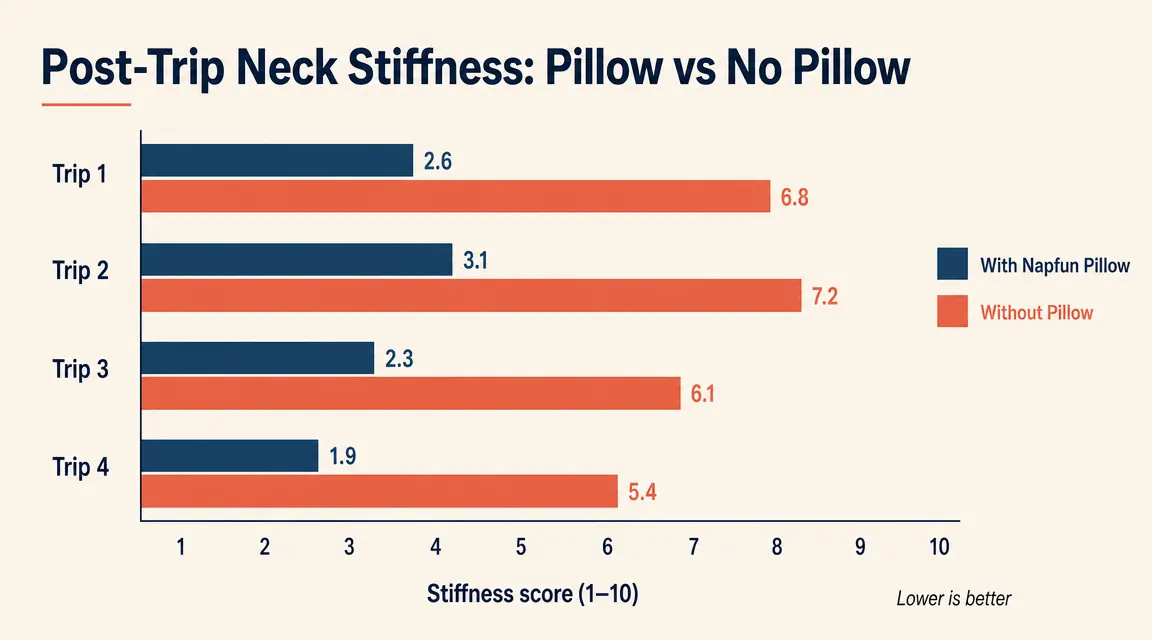
Memory foam responds to two things: pressure and heat. When the foam is brand new and cold, it is at its firmest. As you wear it, your body heat softens the cells. After a few uses, the foam starts to take on a slight impression of your neck shape and softens noticeably. By my third trip with the napfun, I stopped thinking about the firmness entirely. It felt broken in and natural. By the fourth trip I reached for it out of habit rather than deliberate choice, which is the sign that something has genuinely become part of how you travel.
Here is the problem with that break-in story: most people do not give products three tries. They use something once, decide whether they like it, and return it or stuff it in a drawer. The negative reviews that mention the foam being too hard almost universally describe a single use. A very small number mention trying it twice. If you buy this and your first flight is uncomfortable, I am not saying your reaction is wrong. I am saying the product is not finished showing you what it can do yet. That is an imperfect situation that napfun could solve by including a note in the box about break-in expectations.
The Carry Problem: It is Bulkier Than the Photos Suggest
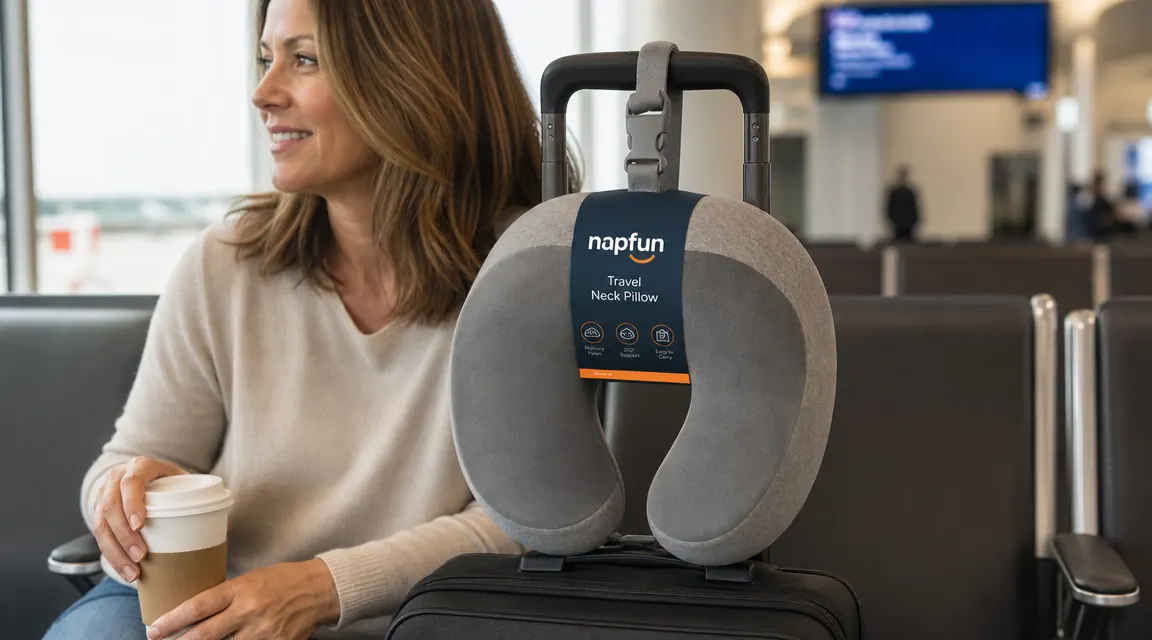
The product photos show the napfun looking like a compact, neatly shaped accessory that clips effortlessly to a bag. The reality is a little more honest than that. The pillow does compress, maybe thirty percent if you squeeze it firmly, but it does not compress anywhere close to flat. When you clip it to a bag handle or shoulder strap, it takes up real space. On a shoulder bag, it swings and bumps as you walk. On a roller bag handle, it works better, though it still adds visible bulk.
At the Kansas City airport going through security, I had it clipped to my backpack strap. It banged against the X-ray conveyor and I had to unclip it and stuff it in a bin separately. That is not a huge inconvenience but it was one more thing to manage when I was also wrangling a seven-year-old through the scanner. On the way home I put it inside my personal item bag instead. It fit, but it took up a noticeable chunk of the bag's main compartment.
If you are a one-bag traveler who packs meticulously, budget for the napfun taking up the equivalent of a hardcover book in your carry-on. It does not pack down the way an inflatable pillow does. For checked bags and car travel, the size is completely irrelevant. For carry-on-only travel on full flights where every inch matters, it is worth knowing before you pack.
The third trip is when everything clicked. The foam had softened, the smell was long gone, and I stopped fussing with it and just slept. That is the version of this pillow the five-star reviewers are talking about.
How It Actually Performs Once You Are Past the Surprises
My fourth trip with the napfun was a flight to see my sister in Denver. Two and a half hours each way. I put the pillow on at boarding, adjusted the front toggle to a comfortable snugness, and fell asleep somewhere over Wichita. I woke up when the wheels went down. No stiffness. No crick. No gripping the seat back to stand. That is the outcome this pillow is supposed to deliver, and by that fourth use it was delivering it consistently.
The memory foam does what it claims to do. It cradles the back of your neck with a firmness that resists the sideways head drift that causes you to wake up tilted and sore. The front toggle system lets you tighten or loosen the fit in a few seconds, which means you are not locked into one pressure level. I typically start loose and tighten slightly once I feel like I might actually sleep. The velour cover is soft enough that I do not feel a seam or texture against my neck even on longer wears.
One design detail worth mentioning: the pillow works better for side-to-side neck stabilization than for preventing your chin from dropping to your chest. If your main problem is your head falling forward when you sleep sitting up, the napfun will reduce it but not eliminate it. The U design does not include a front chin support. For pure chin-forward sleeping, you would want a pillow with a front brace or a different design category altogether. For the sideways tilting problem that gives you a sore shoulder along with a sore neck, this pillow solves it well.
Once you get past the first two uses, this pillow does something none of my cheap ones ever did.
The break-in is real but short. By trip three the memory foam has softened and conformed, and the support it delivers at that point is genuinely different from what you get from an airport kiosk pillow or a folded jacket. Check today's price and read through recent reviews to see how the break-in experience tracks with other buyers.
Amazon Check Today's Price on Amazon →What the 4.3-Star Rating Is Actually Telling You
The napfun sits at 4.3 stars with over twenty thousand reviews. That is a genuinely strong signal at that volume. But it is not 4.7 or 4.8, and the gap matters if you want to understand what you are buying. I spent time in the one-star and two-star reviews to understand the patterns. Three complaints come up consistently: the firmness, the smell, and a smaller number of reports about the toggle closure loosening after several months of use.
The firmness and smell issues I have covered in detail above. They are real, they are temporary, and they are manageable if you know to expect them. The toggle loosening is a different kind of problem. A handful of reviewers mention that after heavy use over many months, the toggle does not grip as securely and the pillow sits a little looser than it used to. I have not experienced this personally. My pillow has been through four trips over roughly five months and the toggle still functions the same as day one. But I mention it because enough reviewers report it that it seems like a real pattern for some units, not an isolated complaint.
The five-star reviewers share a common profile: they are repeat users, they travel by car or plane regularly, and they are comparing the napfun to either nothing or to the cheap inflatable they had before. Their baseline is realistic and the napfun clears it easily. If your baseline is a premium sixty-dollar pillow and you are looking for an equivalent experience at a fraction of the price, you will probably find the napfun a step down in the softness and luxury category even after break-in.
Pros
- Genuinely reduces post-flight neck stiffness once broken in after two or three uses
- Slow-rebound memory foam provides real resistance against sideways head drift
- Velour cover is soft against skin and survives repeated machine washing without shrinking or pilling
- Front toggle lets you adjust fit in seconds, works for a range of neck sizes
- Under twelve dollars makes the try-it risk low enough that hesitating is harder to justify than just buying it
- Off-gassing resolves completely within a day of unboxing
Cons
- Firm out of the box in a way that surprises most first-time users and accounts for most negative reviews
- Off-gassing smell requires unboxing a day before first use, not ideal if you buy it the night before a flight
- Does not compress small enough for minimalist carry-on packing, noticeably bulkier than inflatable alternatives
- Clipping it to a bag handle works but adds awkward bulk that swings during airport walking
- Does not address chin-forward head drop as effectively as the side-to-side drift it handles well
- Toggle closure durability may decline with heavy use over many months according to a pattern in long-term reviews
Who This Is For
This pillow makes the most sense for someone who flies a few times a year on routes where four or more hours in an upright seat is a real thing, and who has never found a neck support solution that actually works. It also works well for anyone who has tried inflatable neck pillows and found the constant pressure fiddling annoying, since memory foam removes that ritual entirely. If you are the kind of person who commits to something for a couple of uses before deciding, you will get a fair evaluation of what this pillow is really capable of. If you can also give it overnight to air out when it arrives, you will skip the only truly unpleasant part of the experience. Families where at least one adult needs to actually rest in transit, not just endure the flight, will find it worth the small investment and the short break-in period.
Who Should Skip It
If you already own a premium neck pillow and are happy with it, there is no reason to switch. If your specific problem is your chin dropping to your chest rather than your head tilting sideways, look for a pillow with a front chin support brace because the napfun U-shape will only partly address your issue. If you are a carry-on-only traveler counting every cubic inch, an inflatable pillow that packs flat will serve you better on the packability front, even if it comes with its own trade-offs. And if you are the type who forms a final opinion on the first use and never revisits it, either set a reminder to try it again on your second trip or consider a premium option with a no-questions return window so the break-in period does not cost you anything if you decide it is not right.
After four trips and a few honest frustrations, this is still the one I grab every time.
The off-gassing surprised me, the firmness frustrated me on the first flight, and clipping it to my backpack was awkward in security. None of that changed the fact that after the break-in it does exactly what I bought it to do. My neck does not hurt anymore when I land. Check today's price and see if the current reviews track with what I described here.
Amazon Check Today's Price on Amazon →